
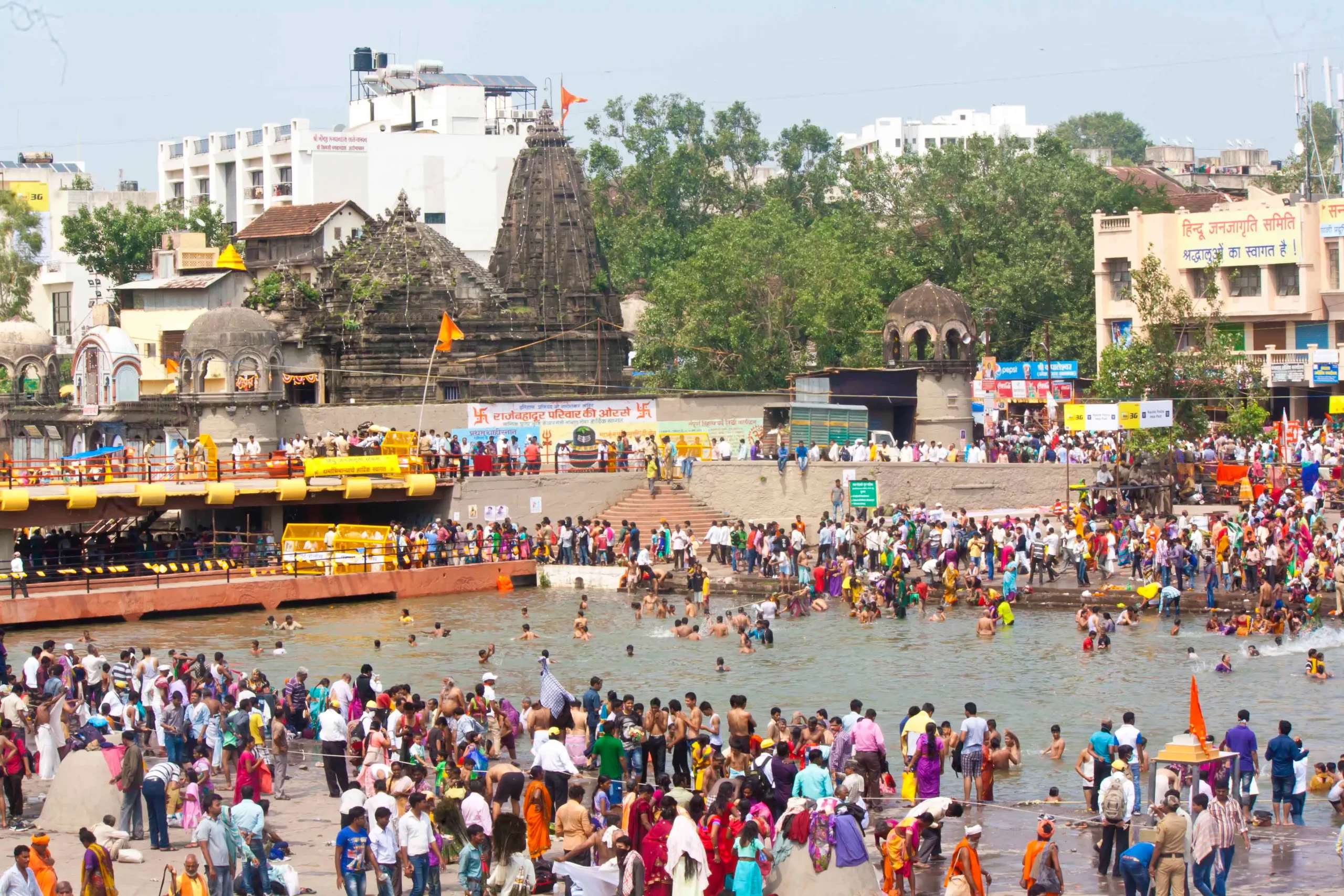
Spiritual Benefits of Kumbh Snan: Why Millions Take the Sacred Dip at the Nashik Kumbh Mela
Kumbh Snan is a sacred bathing ritual in which Hindu devotees enter a holy river or designated bathing area as an act of faith and devotion. Many believe that the ritual offers spiritual purification, helps them reflect on their actions, and strengthens their connection with the divine. At the Nashik Kumbh Mela, this practice is closely linked with the Godavari River, the pilgrimage traditions of Trimbakeshwar, and the religious significance of Simhastha. Understanding these beliefs helps visitors appreciate the ritual while preparing to participate respectfully and safely.
What Is Kumbh Snan?
The word Kumbh means a pot or vessel, while Snan means bathing. Together, Kumbh Snan refers to the sacred bathing associated with the Kumbh Mela, a major Hindu religious gathering held at traditionally significant pilgrimage locations.
For many devotees, the ritual means more than entering the water. It can express a desire to renew one’s spiritual commitment, seek divine blessings, practise humility, and begin a new phase of life with a clearer sense of purpose.
Hindu pilgrimage traditions often connect sacred rivers and bathing places with purification. Research on ritual bathing in India describes holy water as part of a wider religious tradition in which sacred geography, pilgrimage, and symbolic purification work together.
Devotees may combine their bath with prayer, mantra recitation, meditation, charity, or an act of seva, meaning service to others. The exact practices differ according to family customs, regional traditions, religious teachers, and personal beliefs.
The key point: Kumbh Snan has deep religious meaning for many participants, but its spiritual significance should not be confused with a measurable or guaranteed result for every person.
Why Is Nashik Kumbh Mela Spiritually Important?
Nashik holds an important place in Hindu pilgrimage traditions because of its association with the Godavari River, sacred sites connected with Hindu narratives, and the nearby town of Trimbakeshwar.
The Simhastha Kumbh Mela is associated with the Nashik and Trimbakeshwar region. The Maharashtra government has established the Nashik–Trimbakeshwar Kumbh Mela Authority to coordinate preparations for the 2027 event.
Three elements help explain the region’s religious significance.
1. The Godavari River
The Godavari is one of India’s major rivers and holds a sacred place in Hindu traditions. Its source is traditionally associated with the Brahmagiri hills near Trimbakeshwar. The Nashik district’s cultural heritage account describes the river’s origin through a story involving Sage Gautama, Lord Shiva, and the descent of the sacred waters.
Many devotees regard the river as a source of spiritual purification and a setting for prayer, offerings, and pilgrimage. These beliefs help explain why bathing along its sacred stretches has such importance during religious observances.
2. Trimbakeshwar
Trimbakeshwar is an important Shaiva pilgrimage destination associated with Lord Shiva and the Jyotirlinga tradition. Its religious importance contributes to the wider sacred landscape of the Nashik region.
Nashik city and Trimbakeshwar are related parts of the Simhastha pilgrimage, but they are distinct locations. Visitors should check official arrangements to learn which bathing areas, roads, and access routes apply to their intended visit.
3. The Ramayana Tradition
Nashik is also connected with episodes from the Ramayana, the revered Hindu epic. Traditional accounts associate the wider region with the forest life of Rama, Sita, and Lakshmana. Such associations contribute to Nashik’s religious identity and its importance to pilgrims.
These are sacred narratives and religious traditions. Their significance to devotees can be explained respectfully without treating every detail of an epic account as independently established historical fact.
The Legend of Samudra Manthan and the Kumbh Mela
The traditional story of Samudra Manthan, or the churning of the cosmic ocean, is one of the best-known narratives associated with Kumbh Mela.
In the story, the devas (gods) and asuras (often translated as powerful beings or anti-gods) work together to churn the cosmic ocean in search of amrita, the nectar of immortality. Mount Mandara serves as the churning rod, while the serpent Vasuki acts as the rope. Lord Vishnu plays an important role in the broader narrative.
When the nectar appears, a struggle follows over who will obtain it. Traditional accounts connect the journey or spilling of the nectar pot with the sacred status of the Kumbh pilgrimage sites. Nashik’s district cultural heritage page refers to this religious tradition when explaining the significance of Kumbh Mela.
The story carries several layers of spiritual meaning:
- Amrita and immortality: The nectar represents an extraordinary divine gift and, in spiritual interpretation, can evoke the aspiration to transcend ordinary limitations.
- Effort and discipline: The churning suggests sustained effort in the pursuit of a valued goal.
- The struggle between competing forces: The narrative can invite reflection on the tensions between constructive and destructive impulses.
- Sacred bathing: The Kumbh tradition connects pilgrimage and bathing with a sacred story that gives the gathering religious meaning.
This is a Hindu sacred narrative, not a scientifically verified account of a historical event. Its religious importance lies in the meanings that Hindu traditions and communities attach to it.
7 Spiritual Benefits of Kumbh Snan
The spiritual benefits of Kumbh Snan are best understood through Hindu beliefs, ritual practices, and the personal meaning devotees bring to the experience. People may interpret the same ritual differently, and no particular spiritual result is guaranteed.
1. A Symbol of Spiritual Purification
Many devotees approach Kumbh Snan with the intention of spiritual renewal. The sacred dip can symbolize a wish to let go of harmful habits, reflect on past actions, and move forward with greater awareness.
In this sense, purification is not simply about the body becoming wet. It represents a deeper aspiration to live with honesty, restraint, compassion, and a stronger connection with one’s spiritual values.
The meaning of purification varies across Hindu traditions. A person may see the bath as an expression of faith, while another may place greater emphasis on prayer, ethical conduct, meditation, or devotion.
2. Strengthening Faith and Devotion
A pilgrimage can give devotees an opportunity to express their faith through action. Travelling to a sacred place, observing a religious ritual, and joining others in prayer may help a person renew their commitment to their beliefs.
For some, the experience is connected with a family tradition. For others, it may mark a personal vow, a period of reflection, or a wish to reconnect with a spiritual practice.
The significance lies in the devotee’s intention and participation, not in comparing one person’s devotion with another’s.
3. Reflecting on Karma and Punya
Karma broadly concerns action and its consequences in Hindu thought. Punya refers to religious or spiritual merit associated with beneficial actions and certain devotional practices.
Many devotees regard sacred bathing as an act through which they seek punya. Yet Hindu traditions also give importance to conduct, duty, intention, compassion, and self-discipline.
It would be misleading to claim that a single bath automatically erases every past action or removes all consequences of wrongdoing. A more careful understanding connects the ritual with an intention to reflect, improve one’s conduct, and live more responsibly.
For a pilgrim, this might mean returning home with a renewed commitment to speak truthfully, help others, or fulfil family and social responsibilities.
4. Seeking Moksha, or Spiritual Liberation
Moksha is commonly understood as liberation from the cycle of birth and death, although Hindu philosophical traditions explain the nature of liberation in different ways.
For some devotees, participating in Kumbh Snan forms part of a broader spiritual journey toward liberation. The ritual may express reverence, surrender, faith, or a desire to move closer to the divine.
However, Hindu thought does not offer one universal explanation of how every ritual relates to moksha. Different schools and teachers emphasize different combinations of knowledge, devotion, disciplined action, meditation, and divine grace.
Kumbh Snan should therefore be described as a meaningful religious practice for many people, not a guaranteed route to liberation. People who cannot travel to the event are not thereby less spiritual.
5. Making Space for Reflection and Inner Calm
The experience of pilgrimage can provide time away from daily routines. Prayer, quiet reflection, mantra recitation, and focused attention may help some people consider their priorities and reconnect with what matters to them.
The gathering itself can be busy and crowded, so a peaceful experience is not guaranteed. Nevertheless, an individual may find personal meaning in preparing for the ritual, offering a prayer, or reflecting afterwards.
These experiences are personal. They should not be presented as guaranteed psychological or medical benefits.
6. Sharing Faith and Community
Kumbh Mela brings together devotees, families, saints, ascetics, religious teachers, and visitors from different regions. For many participants, the gathering offers a sense of belonging to a larger religious community.
Shared prayer and pilgrimage traditions can help families pass religious customs between generations. They can also give individuals an opportunity to meet spiritual teachers and learn how other communities observe the occasion.
The gathering’s importance therefore extends beyond the act of bathing. It also includes collective worship, religious learning, and the shared experience of pilgrimage.
7. Practising Charity, Humility, and Seva
Many pilgrims connect religious observance with daan (giving or charity) and seva (service). They may offer food, help someone who needs assistance, donate through a reputable charitable organization, or support community arrangements.
These practices can express humility and compassion. They also remind visitors that religious devotion has an ethical dimension.
Charity is not simply a transaction made to secure spiritual rewards. Helping others has value in its own right. Visitors can put this principle into practice by respecting fellow pilgrims, assisting vulnerable people when appropriate, and following the instructions of event staff.
What Does the Godavari River Symbolize in Hinduism?
For many Hindus, the Godavari is a sacred river associated with purification, devotion, and pilgrimage. Its traditional connection with Sage Gautama and Lord Shiva gives it an important place in the religious identity of the Nashik and Trimbakeshwar region.
Bathing in a sacred river can express reverence for the divine, gratitude, and a desire for spiritual renewal. A river may also become part of a family’s religious memory through visits, prayers, offerings, and rites performed over generations.
Yet spiritual reverence does not mean that river water is automatically safe to drink or free from contamination. Natural water can contain germs and other hazards, and swallowing contaminated water can cause illness.
Pilgrims should follow official bathing guidance, avoid swallowing river water, use designated areas, and help keep the river clean. Protecting a sacred river is a practical way to respect its religious and environmental importance.
Kumbh Snan and Moksha: What Do Hindu Traditions Teach?
The relationship between Kumbh Snan and moksha is important to many devotees, but it needs careful explanation.
Hindu traditions include several understandings of spiritual liberation. Some philosophical schools emphasize knowledge of the true nature of the self and ultimate reality. Bhakti traditions place great importance on devotion to God, while other approaches emphasize disciplined action, meditation, and spiritual practice.
Within this diverse religious landscape, Kumbh Snan may serve as an expression of faith and a step in a person’s wider spiritual journey. Devotees may approach it with hope for punya, purification, divine blessings, or progress toward liberation.
The ritual does not replace ethical living, personal discipline, or other practices that a devotee’s tradition may consider important. Nor should anyone be told that missing a pilgrimage makes them spiritually inferior.
The most respectful explanation recognizes that the ritual carries deep meaning for many people while acknowledging that its interpretation depends on religious tradition and individual belief.
The Role of Sadhus, Saints, and Akharas
Sadhus are religious renunciants who may devote much of their lives to spiritual discipline, prayer, meditation, study, or service. Their practices and beliefs differ across Hindu traditions.
An akhara is a religious organization or order, often associated with ascetic traditions. At major Kumbh gatherings, akharas and spiritual teachers contribute to the event’s religious life through their presence, teachings, devotional practices, and established customs.
For pilgrims, meeting a respected teacher or listening to religious discourse can be an important part of the gathering. Some visitors seek guidance about spiritual practice, while others come to observe traditions that they have known through family or community.
Not all sadhus follow the same path, and not every akhara shares identical customs. Visitors should approach religious figures respectfully, ask permission before taking close-up photographs, and avoid treating sacred practices as entertainment.
Why Do Millions of Devotees Participate in Kumbh Snan?
There is no single reason that explains every pilgrim’s decision to attend. Motivations can include:
- Faith and devotion: Expressing reverence and seeking divine blessings.
- Spiritual renewal: Marking a personal commitment to prayer or ethical living.
- Family traditions: Continuing customs passed down through generations.
- Religious vows: Fulfilling a promise or observing an important personal milestone.
- Learning from spiritual teachers: Attending discourses or seeking guidance.
- Community and belonging: Sharing a major religious occasion with other devotees.
- Cultural connection: Experiencing a gathering that holds an important place in Hindu religious life.
Research into Hindu ritual bathing describes sacred-water pilgrimages as part of a wider tradition linking religious belief, sacred geography, and communal participation.
Crowd size alone cannot explain the event’s spiritual importance. Some people may travel long distances for a single ritual, while others participate through prayer, family observances, or religious activities closer to home.
What Is the Significance of Auspicious Bathing Dates?
Hindu religious calendars use lunar dates, planetary positions, and other calendrical traditions to identify occasions considered auspicious for particular observances. At Kumbh Mela, designated bathing days hold special importance for many devotees.
The Nashik–Trimbakeshwar Simhastha Kumbh Mela has its own local traditions and administrative arrangements. The dates and access rules for a future event must be checked against current official announcements rather than copied from a previous Kumbh.
As of 23 October 2026, the official Nashik–Trimbakeshwar Kumbh Mela Authority website is the appropriate starting point for event information. The authority’s official information and planning pages provide context about its role in preparing for the 2027 gathering.
Before travelling, confirm the specific bathing date, designated location, route restrictions, and any instructions for general pilgrims. An auspicious date does not necessarily mean every bathing area will remain open to everyone at all times.
How to Prepare for Kumbh Snan at Nashik?
A little preparation can help pilgrims focus on their religious purpose while managing the practical demands of a major gathering.
1. Verify Official Information
Check the current event schedule, bathing arrangements, transport notices, and access restrictions before leaving home. Use official sources rather than unverified social media posts.
2. Plan Transport and Accommodation
Book suitable accommodation early if your travel dates are confirmed. Allow extra time for road diversions, crowded transport, and movement between Nashik and Trimbakeshwar when applicable.
3. Carry Practical Essentials
Keep identification, necessary medicines, a charged phone, emergency contact details, drinking water for use outside the river, and a small bag for essentials. Wear comfortable clothing and footwear suitable for the expected conditions.
4. Make a Meeting Plan
If travelling with family or friends, agree on a meeting point in case you become separated. Keep children close and supervise older adults or anyone who may need assistance in crowded areas.
5. Consider Individual Health Needs
Speak with a qualified healthcare professional if you have a medical condition that could make crowded areas, prolonged walking, heat, or entering river water risky. Follow official safety directions and do not enter restricted or unsafe water.
Facilities, entry routes, and bathing arrangements can change during the event. Follow the instructions of authorized personnel even if a route or bathing area was accessible on a previous visit.
Simple Rituals and Practices Devotees May Follow During Kumbh Snan
There is no single ritual sequence that every Hindu must follow. Practices vary by region, family tradition, religious community, and spiritual teacher.
Depending on their beliefs and the instructions in place, devotees may:
- Offer a prayer before approaching the bathing area.
- Enter the designated area calmly and follow safety directions.
- Take a sacred dip with a prayerful or reflective intention.
- Recite a familiar mantra or prayer if they wish.
- Express gratitude and reflect on their actions.
- Give charity through a reputable organization or practise seva.
- Follow any local guidance about offerings, photography, and movement around the bathing area.
Visitors should not assume that a particular mantra, number of dips, or ritual sequence is compulsory for everyone. Those who want guidance can consult a trusted religious teacher or family tradition.
Who Can Participate in Kumbh Snan?
Kumbh Mela attracts people with different levels of experience, mobility, and familiarity with Hindu rituals. First-time pilgrims can learn about the customs before travelling, while families can prepare children by explaining the purpose of the gathering and agreeing on simple safety rules.
Older adults and people with limited mobility should check the availability of accessible routes, seating, transport, and assistance before travelling. Facilities may differ by location and event date.
Anyone with relevant medical concerns should seek individual medical advice before entering the water or navigating a large crowd. No bathing arrangement should be assumed safe for every person.
Participation can also take forms other than entering the river. Prayer, listening to religious teachings, charitable service, or observing the gathering respectfully may be meaningful alternatives for people who cannot or do not wish to bathe.
Respectful and Responsible Participation
The spiritual significance of Kumbh Snan goes hand in hand with consideration for fellow pilgrims and the river environment.
- Follow crowd-control directions and use designated routes.
- Avoid pushing, rushing, or entering closed areas.
- Give children and vulnerable visitors extra attention in crowded spaces.
- Ask permission before photographing individuals or private religious moments.
- Avoid littering and place waste in designated bins.
- Do not throw plastic or non-biodegradable items into the river.
- Follow official water-safety guidance and do not swallow river water.
- Seek help from event staff if someone appears unwell or becomes separated from their group.
Natural rivers can carry germs that cause illness if contaminated water is swallowed. Religious reverence and water safety are compatible: pilgrims can honour the Godavari while taking sensible precautions and helping protect its environment.
Common Misconceptions About Kumbh Snan
Misconception 1: Kumbh Snan Guarantees Moksha
Many devotees associate the ritual with spiritual progress, but Hindu traditions differ in their explanations of liberation. It is not accurate to promise that one bath guarantees moksha.
Misconception 2: Every Devotee Experiences the Same Benefits
People approach pilgrimage with different beliefs, intentions, and experiences. Spiritual meaning is personal and shaped by religious tradition.
Misconception 3: Everyone Must Follow One Ritual Sequence
Customs differ across families, regions, and religious communities. Visitors should follow trusted guidance and official event instructions rather than assume one practice is universal.
Misconception 4: Sacred River Water Is Always Safe to Drink
Sacred status is a religious belief, not a water-quality test. Avoid drinking untreated river water and follow relevant health guidance.
Misconception 5: People Who Cannot Attend Are Less Spiritual
Travel may be difficult because of health, finances, age, family duties, or other circumstances. Not attending does not determine a person’s devotion or spiritual worth.
Misconception 6: The Importance of Kumbh Mela Depends Only on Crowd Size
Large gatherings are part of the event’s public scale, but its religious meaning also involves sacred traditions, prayer, spiritual learning, and community.
Conclusion: The Deeper Meaning of Kumbh Snan
For many Hindu devotees, Kumbh Snan represents purification, devotion, reflection, shared faith, and the hope of spiritual growth. At Nashik, these meanings connect with the sacred Godavari River, the pilgrimage traditions of Trimbakeshwar, and the religious narrative associated with Simhastha Kumbh Mela.
The ritual means different things to different people. Some seek punya or divine blessings, others wish to renew their spiritual discipline, and many value the chance to share a significant religious occasion with their community.
A thoughtful pilgrimage combines respect for these traditions with practical preparation. By checking official arrangements, following safety instructions, treating fellow visitors with care, and protecting the river, pilgrims can participate in a way that honours both the religious significance of Kumbh Snan and the shared responsibility of caring for a sacred place.
Frequently Asked Questions About Kumbh Snan
What Are the Spiritual Benefits of Kumbh Snan?
Many Hindu devotees associate Kumbh Snan with spiritual purification, devotion, punya, reflection, and the pursuit of moksha. The ritual may also strengthen a person’s connection with their religious community. These are faith-based meanings, and no particular spiritual outcome is guaranteed.
Why Is Kumbh Snan Important in Hinduism?
Kumbh Snan forms part of Hindu pilgrimage traditions that connect sacred bathing with devotion and purification. For many participants, it is an opportunity to pray, renew their spiritual intentions, and take part in a gathering with deep religious and cultural significance.
Why Is Nashik Significant for Kumbh Mela?
Nashik is associated with the sacred Godavari River, Hindu pilgrimage traditions, and religious narratives connected with the wider region. Trimbakeshwar, an important Shaiva pilgrimage destination, is also linked with the Nashik–Trimbakeshwar Simhastha Kumbh Mela.
What Is the Spiritual Significance of the Godavari River?
Many Hindus regard the Godavari as sacred and associate it with purification, prayer, and pilgrimage. Its traditional origin near Trimbakeshwar is part of the region’s religious heritage. Sacred status does not establish that river water is safe to drink.
Does Kumbh Snan Guarantee Moksha?
No single interpretation applies to all Hindu traditions, and it would be misleading to promise that one ritual guarantees moksha. Devotees may regard Kumbh Snan as part of a wider spiritual journey involving devotion, knowledge, ethical conduct, and other religious practices.
What Is the Connection Between Kumbh Mela and Samudra Manthan?
Samudra Manthan is the Hindu sacred narrative about the churning of the cosmic ocean to obtain amrita, the nectar of immortality. Traditional accounts connect the nectar pot with the sacred status of Kumbh pilgrimage sites. The story is a religious narrative, not an independently verified historical event.
Why Do Devotees Bathe on Auspicious Kumbh Dates?
Many devotees follow Hindu calendrical traditions that identify certain dates as especially suitable for religious observances. Bathing on designated Kumbh days expresses devotion and participation in a shared tradition. Visitors should verify the current official schedule before travelling.
Are There Specific Rituals to Follow During Kumbh Snan?
Customs vary. Some devotees pray before bathing, recite familiar mantras, take a sacred dip, or make charitable offerings. There is no single sequence that every Hindu must follow. Pilgrims should respect their own traditions and follow official bathing and safety instructions.
Can First-Time Pilgrims Participate in Kumbh Snan?
First-time pilgrims can learn about the ritual and prepare to attend, subject to current event arrangements and their individual circumstances. They should check designated bathing areas, access routes, transport, and safety instructions before travelling.
How Can Pilgrims Prepare for Kumbh Snan at Nashik?
Check official event updates, plan transport and accommodation, carry identification and essential medicines, wear practical clothing, and agree on a meeting point with companions. Allow extra time for crowds and follow all directions from authorized event personnel.
How Can Visitors Help Keep the Godavari River Clean?
Use designated waste-disposal facilities, avoid throwing plastic or other waste into the river, and follow local instructions about religious offerings. Respecting the river includes reducing pollution and helping keep bathing areas clean for other visitors.
Where Can Visitors Verify Official Nashik Kumbh Mela Dates and Arrangements?
Start with the official Nashik–Trimbakeshwar Kumbh Mela Authority and the Nashik district administration website. Check for current notices on dates, access, transport, and bathing arrangements before making final travel plans.
Why Is Kumbh Snan Important?
Kumbh Snan is important to many Hindus because it expresses devotion, spiritual purification, and participation in a sacred pilgrimage tradition. Devotees may associate the ritual with punya, reflection, and spiritual growth. Its meaning varies across Hindu traditions, and it does not guarantee a particular spiritual outcome.
Why Is Nashik Kumbh Mela Sacred?
Nashik Kumbh Mela draws religious significance from the Godavari River, local pilgrimage traditions, and its association with Trimbakeshwar. The event forms part of the Hindu Simhastha Kumbh tradition. Devotees gather for sacred bathing, prayer, spiritual learning, and shared religious observance.
What Is the Significance of Bathing in the Godavari River?
Many Hindu devotees regard bathing in the Godavari as an expression of purification, devotion, and reverence for a sacred river. The practice is connected with regional religious traditions and pilgrimage. Its spiritual meaning should be distinguished from claims about the river’s physical water quality.